AI vs Automation: What’s the Difference?
You hear the terms AI and automation thrown around a lot these days, and honestly, it’s easy to get them mixed up. They both sound like they’re about making things easier with technology, right? But while they’re related and often work together, they’re not quite the same thing. Let’s clear up the confusion about the difference between AI and automation and figure out when you’d use one over the other.
Key Takeaways
- Automation is about setting up technology to do specific, repetitive tasks without much human input, like a pre-programmed robot following instructions.
- AI, on the other hand, is about making machines think and learn more like humans, enabling them to make decisions and adapt based on new information.
- The core difference between AI vs automation lies in learning and decision-making; automation follows rules, while AI can learn from data and make its own choices.
- Automation is best for predictable, routine jobs, whereas AI is suited for tasks that need judgment, interpretation, or handling unexpected situations.
- Often, the most effective approach is to combine AI and automation, using each for what it does best to achieve greater efficiency and better outcomes.
Understanding Automation vs Artificial Intelligence
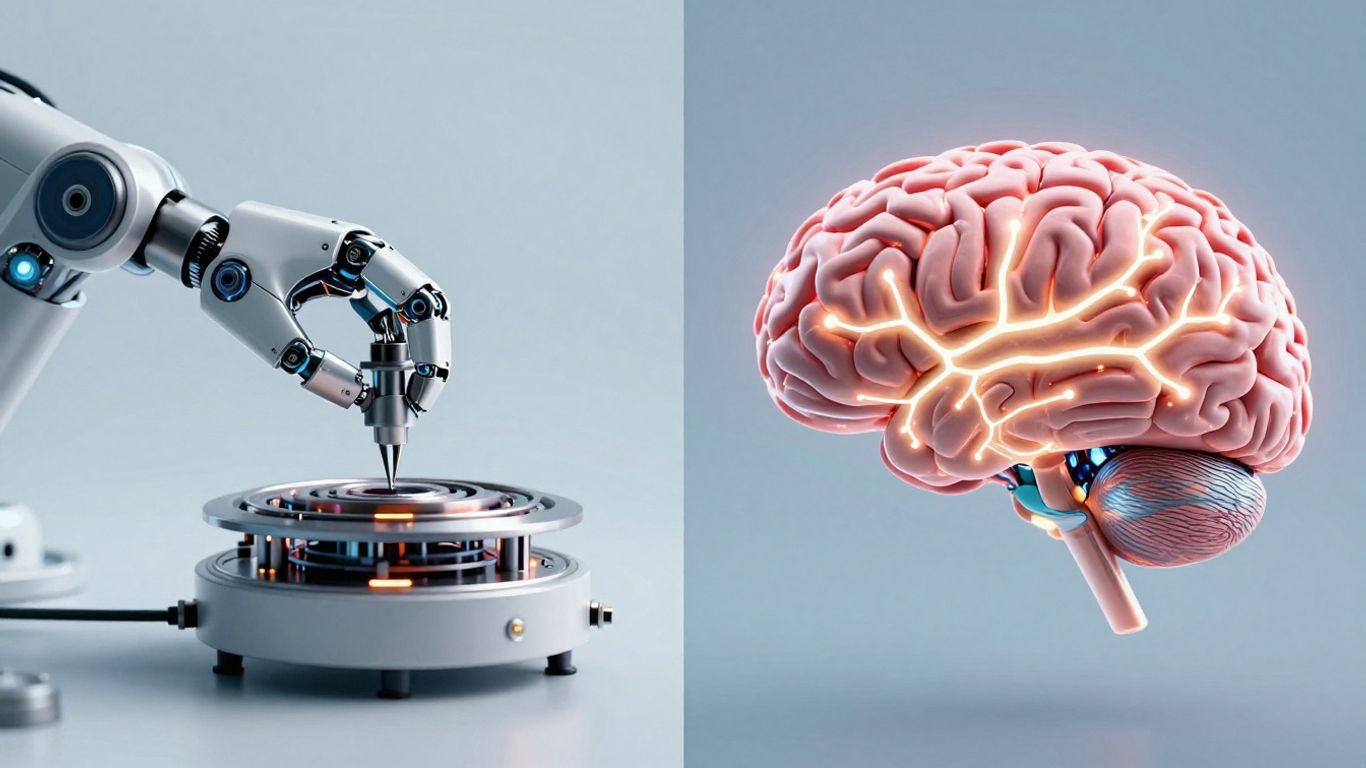
Right then, let’s clear up a bit of a common confusion. You hear ‘AI’ and ‘automation’ thrown around like they’re the same thing, but they’re really not. Think of it like this: automation is about setting up a system to do a specific job, over and over, without you having to lift a finger each time. It’s all about those predictable, repetitive tasks. AI, on the other hand, is a bit more like a brain. It can learn, it can figure things out, and it can make decisions, even when things aren’t exactly the same as last time.
What is Automation?
At its core, automation is about making things happen automatically. You set a rule, like "when this happens, do that," and the system just does it. It’s fantastic for tasks that are always the same and need to be done precisely every single time. Imagine a machine that folds boxes, or software that automatically sends out a receipt after you buy something online. It’s all about efficiency and taking the grunt work out of repetitive jobs. It doesn’t really ‘think’ for itself; it just follows the instructions you give it. This is why it’s so good for things like managing routine workflows.
What is Artificial Intelligence?
Artificial Intelligence, or AI, is a whole different kettle of fish. It’s about creating systems that can do things that normally require human smarts. This includes learning from experience, understanding language, recognising images, and solving problems. Unlike automation, AI can adapt. If you show an AI system lots of examples of cat photos, it can eventually learn to spot a cat in a new photo it’s never seen before. It’s not just following a script; it’s figuring things out. This ability to learn and adapt is what sets it apart.
The Core Difference: Decision-Making and Learning
The big difference really boils down to decision-making and learning. Automation sticks to the script – it does what it’s told, exactly how it’s told. It’s great for consistency. AI, however, can analyse information and make choices. It can also learn from new data and get better over time, often without needing a human to reprogram it. So, while automation is about doing tasks reliably, AI is about performing tasks intelligently.
It’s easy to get these two mixed up because they often work together. You might have an automated process that’s made smarter by AI making decisions within that process. But fundamentally, automation is about execution based on rules, and AI is about cognition and adaptation.
Key Distinctions in AI and Automation
Right, so we’ve touched on what automation and AI are individually. Now, let’s get into the nitty-gritty of how they actually differ. It’s easy to get them mixed up, especially since they often work together, but there are some pretty big differences in what they do and how they do it.
Scope of Application: Precision vs. Interpretation
Think of automation as your super-reliable workhorse. It’s brilliant at doing the same thing, over and over, with pinpoint accuracy. If you’ve got a task that’s predictable and needs to be done exactly the same way every single time – like moving parts on an assembly line or processing a batch of invoices with the same format – automation is your go-to. It sticks to the script, no questions asked. AI, on the other hand, is more of a problem-solver. It’s designed for situations where things aren’t so clear-cut. It can look at a bunch of information, figure out what it means, and then decide what to do next. This could be anything from understanding what you’re saying to a voice assistant, spotting a dodgy transaction in a sea of data, or even predicting what customers might want next. AI is about making sense of the world, not just doing a pre-set job.
Technological Foundations: Rules vs. Cognition
At its heart, traditional automation is all about rules. You tell it exactly what to do, step-by-step, and it follows those instructions. It’s like a very detailed recipe. If something unexpected pops up, it usually grinds to a halt because it wasn’t in the instructions. AI, especially modern AI, is built on a different idea. It uses complex algorithms, kind of like digital brains, that can learn from experience. Instead of just following a recipe, it learns how to cook by watching, trying, and adjusting. This allows it to handle situations that weren’t specifically programmed into it. It’s less about rigid instructions and more about developing a kind of digital ‘thinking’ ability.
Goal Orientation: Repetition vs. Mimicking Intelligence
So, what’s the main point of each? For automation, the goal is simple: do the task perfectly, every time. It’s all about consistency and reliability. Think of it as a highly efficient factory worker. AI’s goals are a bit more ambitious. It aims to mimic human intelligence, or at least certain aspects of it. This means it’s not just about doing a task, but doing it in a way that seems smart. It learns, it adapts, and it can even make decisions that feel like judgment calls. While automation is about doing things right, AI is about doing the right things, even when the situation changes.
The big takeaway here is that automation excels at executing defined tasks with unwavering consistency, whereas AI is geared towards understanding, learning, and adapting to perform tasks that require a degree of cognitive ability, much like humans do.
Here’s a quick rundown:
- Automation: Focuses on executing pre-programmed tasks reliably and repeatedly.
- AI: Aims to simulate human intelligence, enabling learning, problem-solving, and decision-making.
- Automation: Works best with predictable, structured data and processes.
- AI: Can handle complex, unstructured data and adapt to novel situations.
It’s this ability to learn and adapt that sets AI apart, making it a powerful tool for complex problem-solving and innovation, going beyond the fixed capabilities of standard automation.
How AI and Automation Work Together
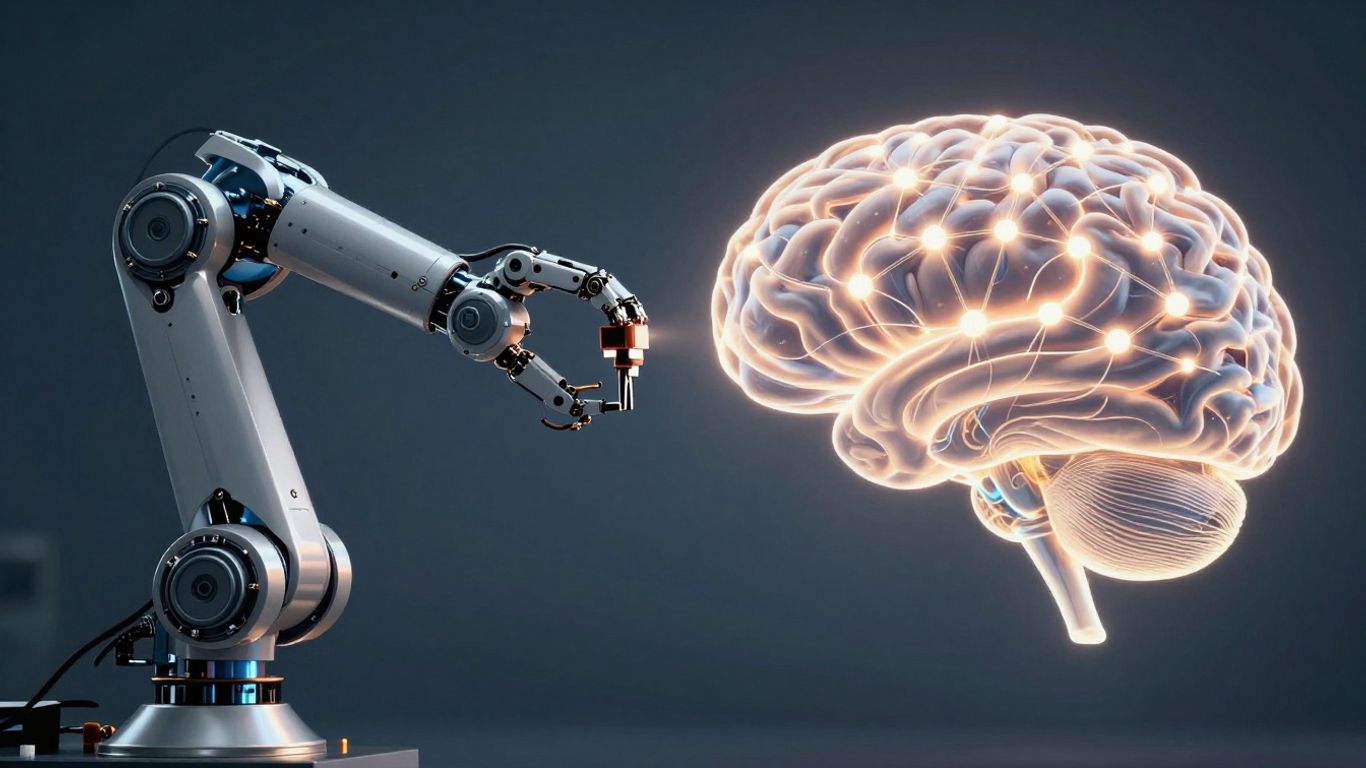
It’s easy to get these two mixed up, right? They both aim to make things run smoother and faster, cutting down on the grunt work humans usually have to do. But here’s the thing: they’re not quite the same, and when you get them working as a team, that’s where the real magic happens.
Complementary Strengths for Enhanced Efficiency
Think of automation as the super-efficient worker who follows instructions to the letter. It’s brilliant at doing the same thing over and over, perfectly, every single time. Automation handles the predictable stuff, like moving data from one place to another or processing standard forms. It’s all about predefined rules: ‘If this happens, then do that.’
AI, on the other hand, is the clever one. It can look at new information, figure things out, and even learn from its mistakes. While automation sticks to the script, AI can adapt. It’s great for tasks that aren’t so clear-cut, where you need a bit of interpretation or judgment.
When you put them together, it’s like giving your efficient worker a brain. The automation handles the heavy lifting, and the AI provides the smarts to deal with unexpected situations or to make sense of the data being processed. This combination means you can tackle more complex jobs without needing a human to step in every five minutes.
AI-Powered Automation: The Best of Both Worlds
This is where things get really interesting. AI-powered automation takes the strengths of both and creates something even more powerful. Instead of just following a set of rules, these systems can actually make decisions. For example, a customer service chatbot that uses AI can understand what a person is asking, even if it’s phrased in a slightly unusual way, and then use automation to fetch the right information or perform an action. It’s not just about speed; it’s about intelligent speed.
Here’s a quick look at how different AI types boost automation:
- Machine Learning (ML): Helps predict when equipment might need maintenance or suggests ways to improve production lines based on past performance.
- Natural Language Processing (NLP): Allows chatbots and virtual assistants to understand and respond to human language, making customer interactions smoother.
- Computer Vision: Used in factories to automatically spot defects in products on a production line, something that would be very tedious for humans to do consistently.
Combining AI with automation means you’re not just automating tasks; you’re automating processes that require a degree of understanding and decision-making. This leads to a significant jump in what can be achieved.
Leveraging Human Ingenuity with Intelligent Systems
So, does this mean humans are out of a job? Not at all. The goal isn’t to replace people entirely, but to free them up from the boring, repetitive bits so they can focus on the really important stuff. Think about complex problem-solving, creative thinking, or building relationships – these are areas where humans still shine. AI and automation can handle the routine, allowing people to concentrate on tasks that require that unique human touch. It’s about creating a partnership where technology handles the predictable, and humans handle the unpredictable and the innovative. This partnership can lead to some pretty impressive results, making businesses more agile and responsive to change. It’s about using intelligent systems to augment human capabilities, not replace them.
AI’s Evolving Capabilities
Artificial intelligence isn’t just a buzzword; it’s a rapidly changing field that’s constantly pushing the boundaries of what machines can do. Think of it like this: automation is great at doing the same thing over and over, perfectly. AI, on the other hand, is learning to think, adapt, and even create. The real magic happens when AI starts to learn and make its own decisions, moving beyond just following instructions. This evolution is happening across several key areas.
Machine Learning and Deep Learning
These are the engines driving much of AI’s progress. Machine learning (ML) lets systems learn from data without being explicitly programmed for every single scenario. It’s like teaching a kid by showing them lots of examples. Deep learning (DL) is a subset of ML that uses complex, layered structures called neural networks, inspired by the human brain. This allows it to tackle really intricate problems, like recognising faces in photos or understanding spoken words. These technologies are behind many of the smart features we use daily, from personalised recommendations to advanced analytics.
Natural Language Processing and Computer Vision
These two areas are all about how AI interacts with the world. Natural Language Processing (NLP) gives machines the ability to understand, interpret, and generate human language. This is what powers chatbots that can hold a decent conversation or translation tools that actually make sense. Computer Vision, meanwhile, allows AI to ‘see’ and interpret visual information from images or videos. Think of self-driving cars identifying pedestrians or medical AI spotting anomalies in X-rays. It’s about giving AI eyes and ears.
Expert Systems and Robotics Integration
Expert systems are an older, but still relevant, branch of AI. They aim to replicate the decision-making ability of a human expert in a specific field, often using a set of rules and logic. While they don’t ‘learn’ in the same way as ML, they can be incredibly useful for complex, rule-based problem-solving. When you combine these intelligent systems with robotics, you get machines that can not only perform physical tasks but also make intelligent decisions about how and when to perform them. This integration is paving the way for more sophisticated automation in manufacturing, logistics, and even healthcare.
The future of AI is moving towards systems that can not only perform tasks but also plan, execute, and adapt autonomously. These ‘agentic’ AI systems are designed to take initiative, breaking down complex goals into smaller steps and managing their own progress with minimal human input. While they will still need human guidance for setting overall objectives and ethical considerations, their ability to operate independently marks a significant shift.
Here’s a quick look at how these capabilities are developing:
- Machine Learning: Getting better at predicting outcomes and identifying patterns in massive datasets.
- Deep Learning: Enabling more accurate image and speech recognition, and complex problem-solving.
- NLP: Improving conversational AI and text analysis for better human-computer interaction.
- Computer Vision: Advancing object detection and scene understanding for applications like quality control and autonomous navigation.
- Robotics: Integrating intelligence for more adaptable and autonomous physical operations.
As these capabilities continue to advance, AI is becoming less about simple task execution and more about intelligent assistance and autonomous operation. This evolution means AI is increasingly capable of handling tasks that were once thought to be exclusively human domains, fundamentally changing how we work and interact with technology. The ongoing advancements in AI are a key reason why it’s becoming so intertwined with modern automation strategies.
When to Choose AI or Automation
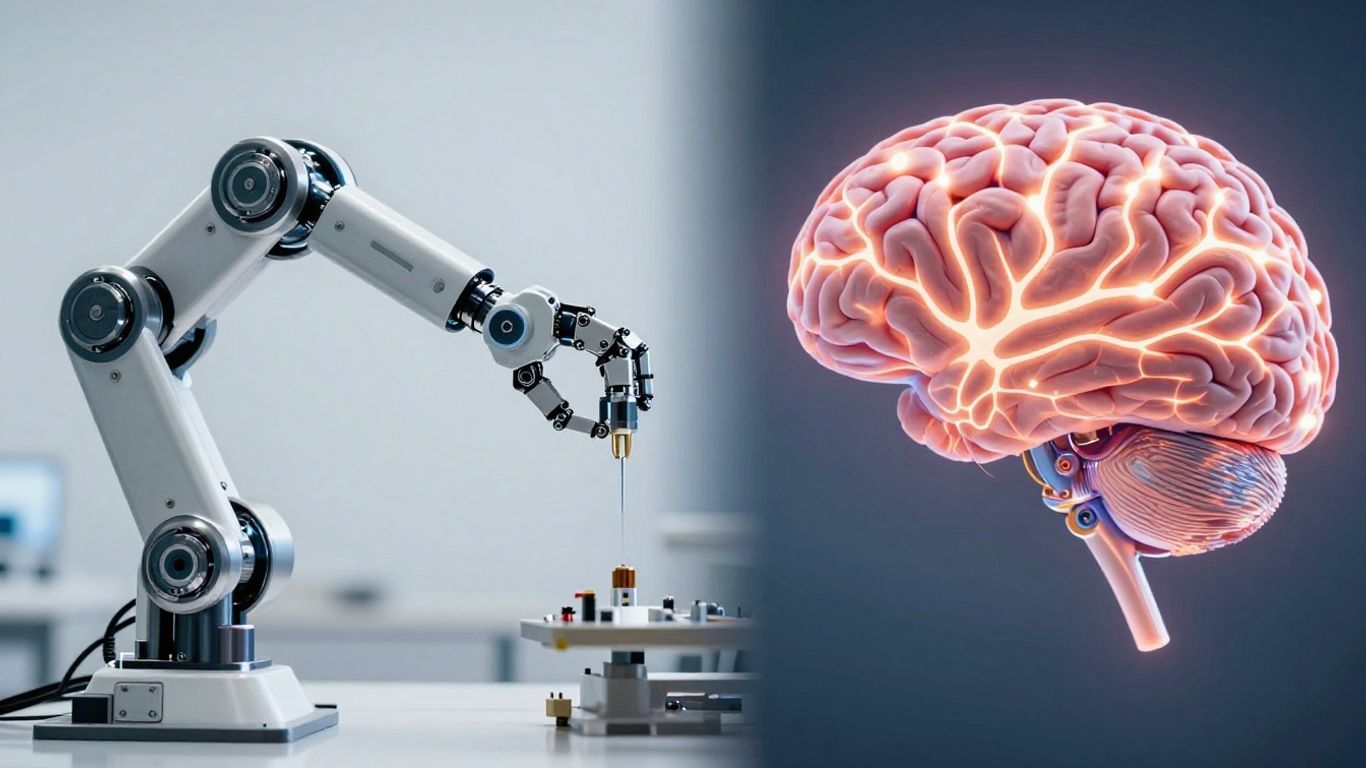
Deciding whether to use automation or artificial intelligence (AI) for a task really boils down to what you need that task to do. It’s not really about which one is ‘better’, but more about which one is the right fit for the job at hand. Think of it like choosing between a hammer and a screwdriver – both are tools, but you wouldn’t use a hammer to tighten a screw, would you?
Automation for Predictable, Repetitive Tasks
If you’ve got a job that’s the same every single time, and it follows a clear set of steps, then automation is probably your go-to. This is the stuff that’s predictable, structured, and doesn’t really change. We’re talking about things like:
- Entering data from one system into another.
- Sending out standard email notifications based on a trigger.
- Performing calculations that always use the same formulas.
- Approving requests that meet specific, predefined criteria.
Automation is brilliant for these kinds of tasks because it can do them quickly, consistently, and without getting tired or making silly mistakes. It’s all about efficiency and freeing up people from the mundane. It’s great for processes that have clear rules, because the main benefit comes from speed and consistency, and cutting down on manual effort. You can get a good handle on rule-based automation for these kinds of jobs.
AI for Unpredictable, Judgment-Based Work
Now, if the task involves a bit more thinking, interpretation, or dealing with stuff that isn’t always the same, that’s where AI shines. AI is designed to handle more flexible work that involves learning, pattern recognition, language, or decision-making. It’s better when the work is less predictable or needs a bit of human-like judgment.
Consider these examples:
- Summarising long documents or articles.
- Classifying customer feedback based on sentiment.
- Generating creative text, like marketing copy or social media posts.
- Recognising objects in images or videos.
- Translating languages on the fly.
AI can process unstructured information and tasks that need flexibility. It becomes more useful when a task can’t be solved by just following a script and needs more context-aware output. It’s about mimicking cognitive functions and learning from data.
When you’re looking at tasks that require interpretation or prediction, especially when the conditions or data inputs change frequently, AI is the way to go. It can handle the messy bits that automation can’t.
Identifying the Right Tool for the Job
So, how do you figure out which one to pick? Start by looking closely at the task itself. Ask yourself:
- Is it repetitive and predictable? If yes, automation is likely the answer. Think about the steps involved – are they always the same?
- Does it require interpretation or decision-making based on changing information? If the answer is yes, AI is probably a better fit. Does it need to understand context or make a judgment call?
- Can it be solved with a fixed set of rules? If yes, automation. If it needs to adapt or learn, then AI.
Often, the best solution isn’t one or the other, but a combination. Automation can handle the routine parts, while AI can step in for the more complex, decision-driven aspects. This blend can lead to some seriously impressive results, making your processes smarter and more efficient. Understanding the distinction between AI and automation is key to selecting the right approach for your business.
So, What’s the Takeaway?
Right, so we’ve had a good yarn about AI and automation. It’s pretty clear they aren’t the same thing, even though they often get lumped together. Think of automation as the reliable workhorse, doing the same job over and over, perfectly. AI, on the other hand, is more like the clever mate who can learn new tricks and figure things out on the fly. While automation sticks to the script, AI can actually make decisions and adapt. For most businesses, the real magic happens when you get them working together. Automation handles the grunt work, and AI adds that bit of smarts to make things even better. It’s not really about one beating the other; it’s about using them both wisely to get the best results.
Frequently Asked Questions
So, what’s the main difference between automation and AI?
Think of it like this: automation is like a super-efficient robot that follows instructions perfectly, every single time. It’s brilliant for tasks that are the same over and over. AI, on the other hand, is more like a clever assistant that can learn, figure things out, and even make smart guesses. It’s great when things change or when a task needs a bit of thinking, like understanding what someone is saying or spotting a trend.
Can automation learn and get better on its own?
Not really. Automation sticks to the rules it’s given. If you want it to do something new or differently, a person usually has to update its instructions. AI is the one that can actually learn from new information and get smarter over time without needing someone to constantly tweak it.
When should I use automation instead of AI?
Automation is your go-to for tasks that are predictable and need to be done exactly the same way each time. Imagine sending out the same welcome email to new customers or processing invoices that always have the same format. Automation saves heaps of time and cuts down on mistakes for these kinds of jobs.
And when is AI the better choice?
AI shines when tasks are a bit more complex and unpredictable. This includes things like understanding customer feedback, spotting unusual activity in data, or even creating new content. If a job needs a bit of judgment or the ability to adapt to different situations, AI is usually the way to go.
Are AI and automation totally separate things?
They’re not the same, but they often work together really well! You can think of AI as making automation even smarter. For example, an automated system might sort emails, but an AI could then read those emails and decide the best way to reply. It’s like giving your efficient robot a brain!
What are some real-world examples of AI and automation working together?
Sure! In customer service, automation might handle basic questions, while AI figures out the trickier ones or suggests the best answer for a human agent. In manufacturing, robots (automation) might do the heavy lifting, but AI helps them adapt to slight changes in the parts they’re working with or predict when a machine might need maintenance.