AI for Dentists in Australia: A Practical Guide
G’day! So, we’re talking about AI for dentists in Australia today. It sounds a bit sci-fi, doesn’t it? But honestly, it’s becoming a really practical thing for dental clinics down under. Think of it as a new set of tools that can help make things run smoother, catch problems earlier, and even make patient care a bit more personal. We’re not talking about robots taking over, but more about how technology can lend a hand to dentists and their teams, making their jobs a bit easier and patient outcomes a bit better. It’s all about using smart tech to help with the everyday stuff.
Key Takeaways
- AI for dentists Australia is helping to spot dental issues much earlier than before, sometimes even before they’re visible to the naked eye, by analysing X-rays and scans.
- Practice management gets a boost with AI dental practice tools, like an AI receptionist dentist that can handle appointment bookings and cut down on admin tasks.
- Patients get more personalised care as AI can help create treatment plans just for them, looking at their specific history and needs.
- AI for dental clinics is also about making sure everything is up to scratch, helping with quality checks and making sure treatments follow the latest guidelines.
- The future looks like AI and dentists working together, using data to provide better, evidence-based care and keeping patients more involved in their own oral health.
Enhancing Diagnostics With Dental AI Automation
The everyday work of dentists in Australia is changing, and it’s much of it is thanks to AI-driven diagnostics. Dental AI is not just a buzzword – it’s a tangible step forward for clinics wanting more accuracy, quicker decision times and a chance to catch problems before they get out of hand.
AI For Early Detection Of Dental Problems
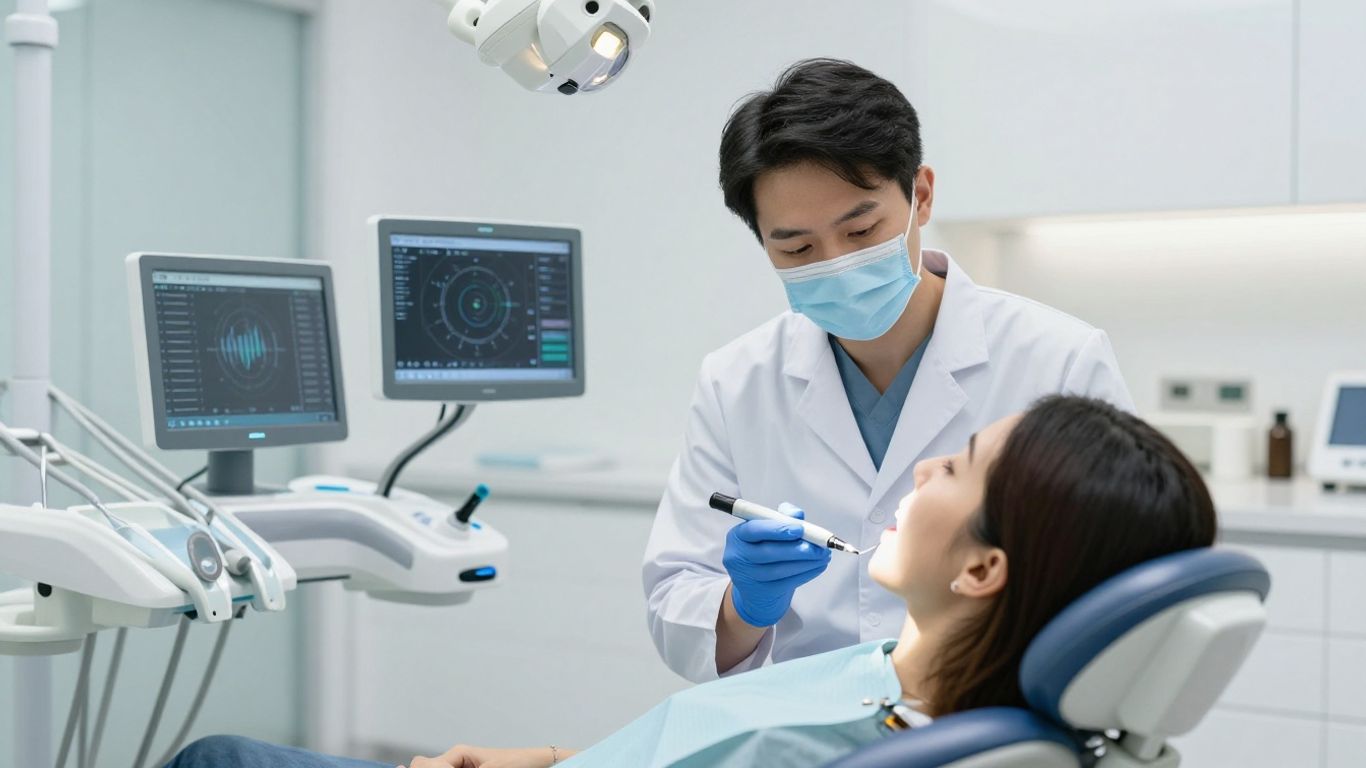
Dentists have always relied on careful exams and X-rays, but now, AI software can scan dental images for tiny issues humans often miss. AI can pick up the earliest signs of decay by spotting subtle changes in tooth structure and bone, long before symptoms appear. These systems are being used to analyse digital X-rays and intraoral photos, helping to flag problems like:
- Early-stage cavities
- Signs of gum disease on radiographs
- Hidden cracks or lesions in teeth
AI is especially handy for patients who might otherwise slip through the cracks during checkups. It gives clinics a safety net, making early intervention much more possible. For more details on how this technology works in imaging, see how dental imaging software is being transformed by AI artificial intelligence in dental imaging.
Using AI for early detection lets dentists act before small dental problems spiral into much bigger headaches for both patients and clinics.
Improving Diagnostic Consistency In Dentistry
Humans get tired or distracted, and that can sometimes mean diagnostic differences between dentists – or even missed details. AI systems don’t suffer from fatigue. They apply the same standards to every scan, bringing a new level of reliability to the diagnosis process. Clinics using these tools report:
| Benefit | Without AI | With AI |
|---|---|---|
| Missed Diagnoses (%) | Up to 30% | Less than 10% |
| Diagnostic Variation | Moderate–High | Low |
| Time Spent Per Scan | 5-7 minutes | ~1 minute |
- Results are always based on set protocols
- There’s less room for interpretation errors
- Workflows speed up because images get analysed quickly
AI In Oral Cancer Screening
Early detection is absolutely key with oral cancer. AI offers pattern recognition far better than the human eye when looking at tissue and surface changes. Dentists use these systems to scan for:
- Abnormal tissue patches on soft palette, tongue or gums
- Changes in texture or colour invisible in routine checks
- Tumours that are extremely hard to spot early
What makes AI promising here is that it takes away guesswork. Cases needing further biopsy or monitoring get flagged immediately, which means patients potentially get life-saving treatment sooner.
AI automation is already proving itself in busy dental clinics. These advances aren’t just making diagnosis quicker and sharper; they’re giving dentists a new kind of professional back-up. And it’s only the beginning—the future holds even more possibilities for dental teams ready to bring AI into daily care.
Streamlining Practice Management With AI For Dentists Australia
Running a dental practice in Australia involves a fair bit of juggling, doesn’t it? Between patient appointments, paperwork, and keeping everything running smoothly, it can feel like a lot. That’s where artificial intelligence is starting to lend a hand, making things a bit easier for dentists and their teams.
AI Receptionist Dentist For Appointment Scheduling
Remember the days of endless phone calls just to book a check-up? AI is changing that. Think of an AI receptionist that can handle appointment scheduling 24/7. These systems can manage bookings, send out reminders, and even help fill last-minute cancellations. This means fewer missed appointments and a more consistent flow of patients through the door. It frees up your front desk staff to focus on greeting patients and handling more complex queries, rather than just being on the phone all day. Some practices are finding this makes a big difference to their daily operations.
Automating Administrative Workflows
Beyond just scheduling, AI can tackle a heap of other administrative tasks that eat up valuable time. Imagine AI systems that can automatically extract information from patient forms, process insurance claims, or even manage billing. This kind of automation reduces the chance of human error, which can be a real headache to sort out later. It also means your team spends less time on repetitive data entry and more time on tasks that require a human touch. For many clinics, this shift is about reclaiming hours in the week.
Optimising Patient Communication
Keeping patients informed and engaged is key to good dental care. AI can help here too. Automated systems can send out personalised follow-up messages after appointments, provide post-treatment instructions, or even answer frequently asked questions via a chatbot. This consistent communication helps patients feel looked after and more likely to stick to their treatment plans. It’s about making sure patients have the information they need, when they need it, without adding to your team’s workload. Some platforms, like Adit, are designed to integrate these communication features directly into your practice management software, simplifying the whole process.
The goal here isn’t to replace the personal connection dentists have with their patients, but rather to use technology to handle the routine tasks, allowing more time for that important face-to-face interaction and complex clinical decisions. It’s about working smarter, not harder.
Here’s a quick look at how AI can help manage your practice:
- Appointment Management: Automated booking, rescheduling, and reminders.
- Patient Data Handling: Efficiently processing forms, medical histories, and insurance details.
- Communication: Automated follow-ups, instructions, and FAQ responses.
- Billing and Claims: Streamlining the financial administration side of the practice.
By integrating these AI tools, Australian dental clinics can look forward to smoother operations and a more efficient way of managing their day-to-day business. This allows dentists to concentrate more on providing excellent patient care, which is what it’s all about. You can find more information on how dental practice management software is evolving with AI to support these changes.
Personalised Patient Care Through AI Dental Practice
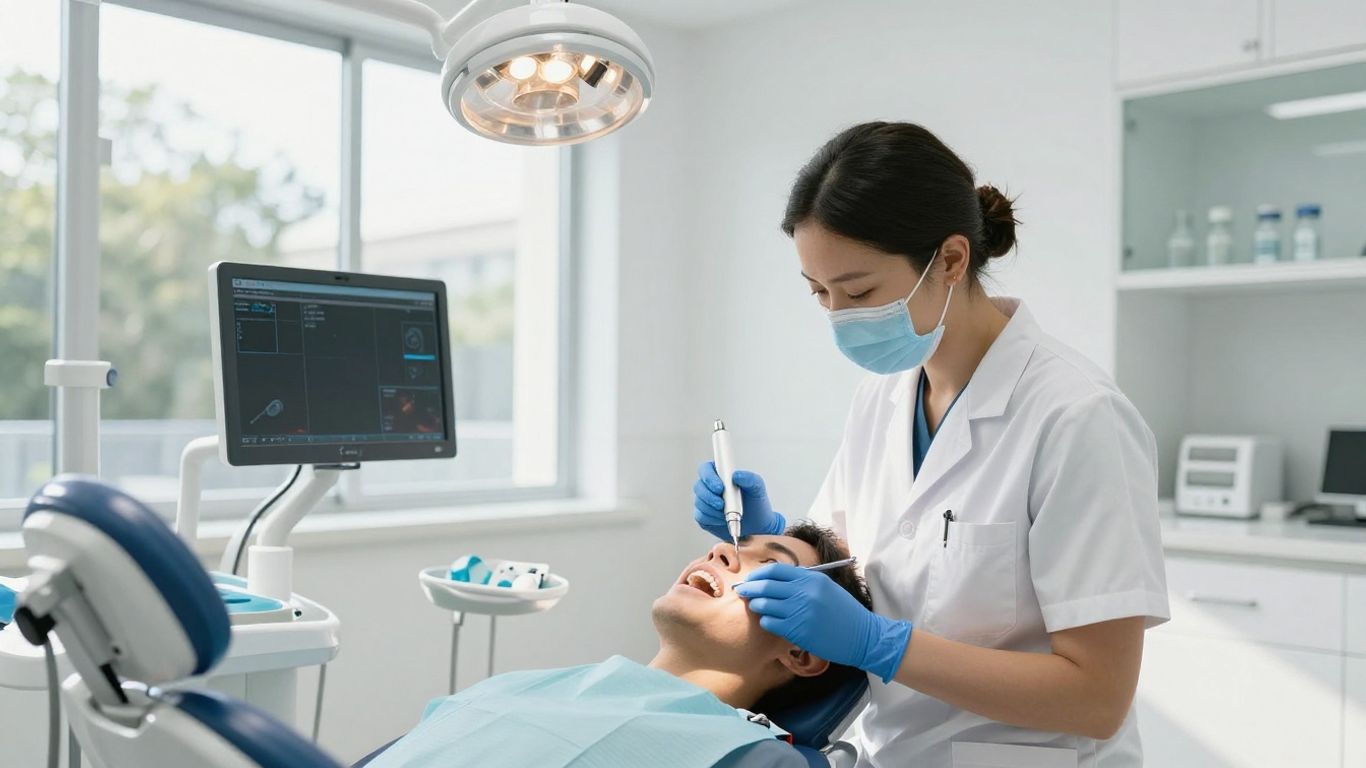
AI is really changing the game when it comes to looking after our teeth and gums. It’s moving us away from that old ‘one-size-fits-all’ approach and towards care that’s made just for you. Think of it like getting a tailor-made suit instead of one off the rack – much better fit, right?
Tailored Treatment Plans For Better Results
So, how does AI actually do this? Well, it looks at a whole heap of information about you. This includes your dental history, any other health issues you might have (like diabetes, which can affect your gums), your lifestyle, and even how you’ve responded to past treatments. By crunching all these numbers, AI can help dentists figure out the best way forward for your specific situation. For example, if you’re prone to cavities, AI might suggest more frequent fluoride treatments or specific brushing techniques. It’s all about getting the most effective treatment for you.
- Analysing your complete dental records.
- Considering your general health and any ongoing conditions.
- Factoring in lifestyle habits like diet and smoking.
- Predicting how different treatments might work for you.
AI For Monitoring Patient Progress
It’s not just about the initial plan, though. AI is also pretty handy for keeping an eye on how you’re doing over time. Devices like smart toothbrushes are a good example. They can track how well you’re brushing, if you’re missing spots, or if you’re pressing too hard. This information gets sent back, and it helps you (and your dentist) see if your daily routine is actually making a difference. This constant feedback loop helps make sure you’re on the right track for better oral health.
AI can turn complex health data into simple, visual reports. These reports make it easier for both you and your dentist to see what’s going well, where there might be risks, and how things are changing over time. It’s like having a clear dashboard for your mouth.
Empowering Patients With Smart Oral Health Tools
Ultimately, AI is about giving you more control. Tools like AI-powered apps and smart devices give you real-time tips and information. You can see instantly if you’re missing a spot while brushing or if your saliva pH is a bit off. This kind of immediate feedback makes it easier to build good habits and understand how your daily choices impact your oral wellbeing. It’s about making preventive care something you actively participate in, not just something that happens at the dentist’s office. This approach is a big step forward for preventive dentistry.
Leveraging AI For Dental Clinics In Australia
Across Australia, dental clinics are finding practical ways to weave artificial intelligence into their daily operations. It’s not just about fancy gadgets; it’s about making things work better for both the dentist and the patient. Think of it as having a super-smart assistant that can handle a lot of the heavy lifting, freeing you up to focus on the actual care.
Clinical Decision Support Systems
One of the biggest wins with AI is how it helps dentists make decisions. These systems can look at a patient’s history, compare it with heaps of research and successful treatments from similar cases, and then suggest what might work best. It’s like having instant access to the latest dental knowledge, tailored to the person sitting in your chair. This helps make sure treatments are up-to-date with what the Australian Dental Association recommends, for example. It’s a real boost for evidence-based care, giving you more confidence in your treatment plans.
- Real-time insights: Get immediate suggestions based on current research.
- Data analysis: AI processes patient data alongside vast clinical databases.
- Best practice alignment: Recommendations often align with established dental guidelines.
- Risk identification: Helps flag patients who might need closer monitoring.
AI systems can review treatment plans, pointing out any potential issues to ensure they meet clinical guidelines. This is great for ongoing professional development and keeping the standard of care high.
Quality Assurance and Compliance
Keeping everything up to scratch with regulations and quality standards can be a full-time job. AI can step in here too. It can review treatment plans and patient records, flagging anything that looks a bit off or doesn’t quite meet the mark. This isn’t about replacing your judgement, but rather acting as a safety net. It helps ensure that every patient receives care that’s not only effective but also compliant with the latest standards. This is particularly useful when you’re dealing with complex cases or new procedures. For clinics looking to improve their overall service, this kind of automated check can be a lifesaver. It also helps in training new staff by providing clear examples of what good practice looks like.
Integrating AI Into Daily Workflows
Getting AI into the swing of things in a busy dental practice doesn’t have to be a massive overhaul. Many clinics start small, perhaps with AI that helps read X-rays more accurately, spotting things that might be missed in a quick glance. This is a big help when you’re seeing a lot of patients. Then, you can look at integrating AI for scheduling appointments, sending out reminders, or even managing patient communications. These tools can automate a lot of the back-and-forth, reducing errors and freeing up your reception staff to deal with more personal interactions. The goal is to make AI a natural part of how you work, not an extra burden. It’s about making your practice run smoother and allowing you to spend more quality time with your patients, which is what it’s all about, really. For a look at how AI is already making a difference, you can check out some of the advancements in dental diagnostics.
- Start with diagnostic imaging AI for better X-ray analysis.
- Implement AI for appointment scheduling and patient reminders.
- Use AI to automate administrative tasks like data entry.
- Explore AI-powered tools for treatment planning assistance.
By adopting these technologies gradually, Australian dental clinics can improve efficiency and patient care without disrupting their existing operations. It’s about smart integration, not just adding more tech for tech’s sake.
The Future Of Dentistry: AI And Evidence-Based Care
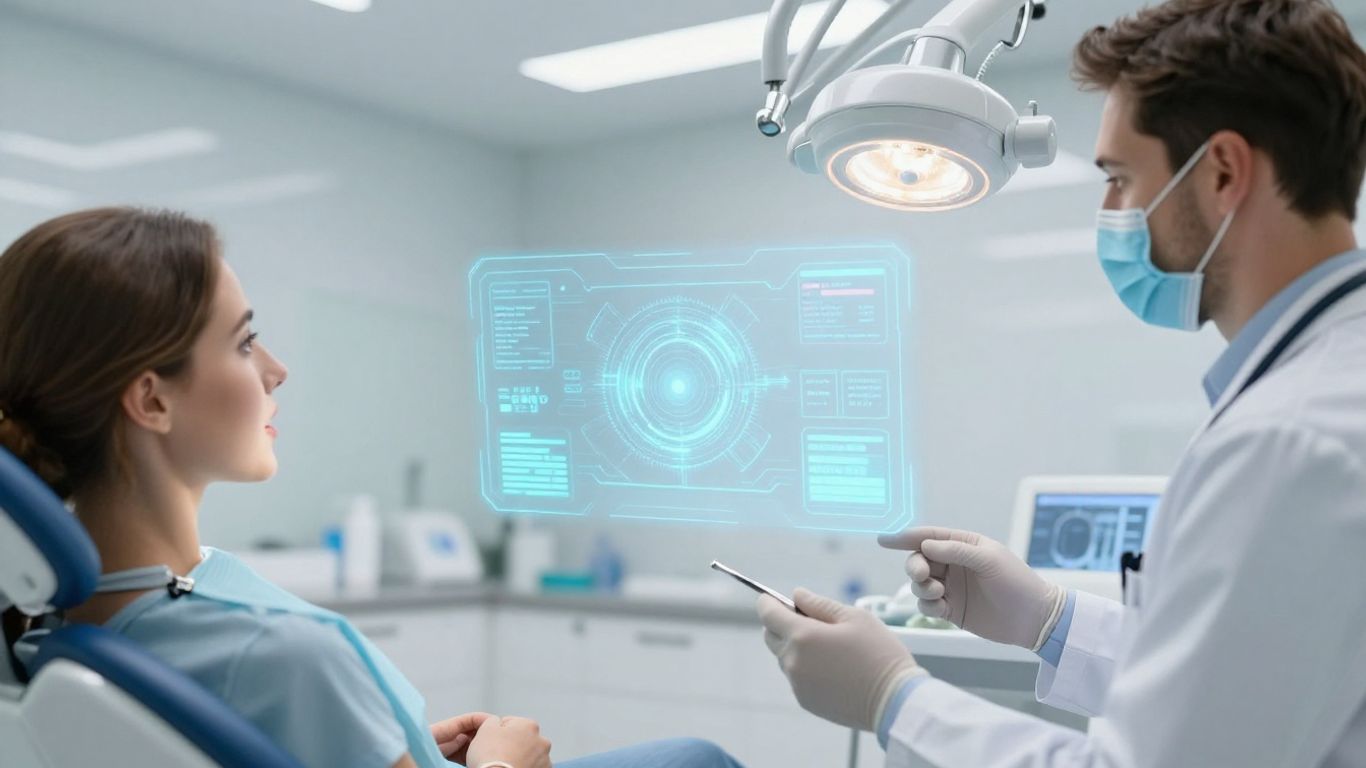
So, what’s next for dental care here in Australia? It’s pretty clear that artificial intelligence is set to play a massive role, especially when it comes to making sure the care we get is backed up by solid evidence. Think of it as a super-smart assistant for your dentist, helping them make the best calls based on heaps of data and the latest research.
Supporting Evidence-Based Patient Care With AI
This is where AI really shines. Instead of relying solely on what a dentist might have learned years ago or what they see in a single patient, AI can sift through vast amounts of clinical information. It can look at what treatments have worked best for thousands, even millions, of similar cases. This means your dentist can get recommendations that are not just a guess, but are actually proven to be effective. It’s like having a massive library of dental knowledge instantly available to help make decisions. This approach helps ensure that the treatment you receive is the most appropriate and likely to give you the best results, aligning with Australian healthcare standards.
Predictive Analytics For Proactive Health
One of the most exciting parts is how AI can help predict future problems. By looking at your dental history, lifestyle, and even genetic factors, AI can flag potential issues before they even start. Imagine knowing you’re at a higher risk for cavities in a certain area, or that your gums might be more susceptible to disease down the track. This allows dentists to be proactive, suggesting preventative measures or early interventions. It shifts the focus from just fixing problems to actively preventing them, which is a much better way to look after your teeth long-term.
The Synergy Of AI And Dental Professionals
Now, don’t get me wrong, AI isn’t about replacing dentists. It’s about giving them better tools. The human touch, the empathy, the ability to understand a patient’s fears and concerns – that’s something AI can’t replicate. What AI does is handle the heavy lifting with data analysis, diagnostics, and administrative tasks. This frees up dentists to spend more quality time with you, explaining your options and providing that personal care we all value. It’s a partnership, really. AI handles the patterns and the numbers, while the dentist brings the skill, judgment, and human connection. This collaboration is what will shape the future of dentistry, leading to more efficient practices and, most importantly, better outcomes for patients.
The integration of AI into dental practices is moving us towards a future where care is not only more precise and efficient but also deeply personalised. By analysing individual patient data and drawing on extensive clinical evidence, AI assists dental professionals in making informed decisions, ultimately leading to improved oral health for all Australians.
Here’s a quick look at how this partnership works:
- Data Analysis: AI processes patient records, X-rays, and scans to identify trends and potential issues.
- Decision Support: AI provides evidence-based treatment options for the dentist to consider.
- Personalised Care: AI helps tailor treatment plans to each patient’s unique needs and circumstances.
- Efficiency Gains: Automation of tasks allows dentists more time for direct patient interaction and complex procedures.
This combination of technology and human skill is set to redefine dental care, making it more accessible, effective, and patient-centred. It’s a really positive step forward for everyone involved in dental care.
Wrapping Up: AI and Your Aussie Dental Practice
So, there you have it. AI isn’t some far-off sci-fi concept anymore; it’s here, and it’s actually making a real difference in dental clinics all over Australia. From spotting tiny issues on X-rays that might otherwise be missed, to sorting out appointment schedules so things run a bit smoother, it’s proving its worth. It’s about giving dentists more time to actually focus on you, the patient, and making sure treatments are spot-on based on the latest info. While it’s not replacing the human touch – that’s still super important – AI is definitely becoming a handy tool in the kit. Embracing these changes means better care for everyone, and that’s a win in my book.
Frequently Asked Questions
How can AI help dentists find problems sooner?
AI is like a super-smart assistant for dentists. It can look at X-rays and photos of your teeth and gums really closely. It’s so good at spotting tiny changes that might mean a cavity or gum disease is starting, even before you can see them or feel any pain. This means dentists can help you out earlier, often with simpler treatments.
Can AI create special treatment plans just for me?
Absolutely! AI can look at all your past dental visits, your general health, and even how you live your life. Using all this info, it can help your dentist figure out the best way to fix your teeth or gums that’s just right for you. It’s like having a plan made especially for your smile.
Will AI replace my dentist?
Not at all! Think of AI as a helpful tool that makes dentists even better at their jobs. It can handle some of the more time-consuming tasks, like analysing images or managing appointments, so your dentist can spend more quality time actually talking with you and taking care of your teeth.
How does AI help manage appointments and paperwork?
AI can be like a super-efficient receptionist. It can help book your appointments, send you reminders so you don’t forget, and even help sort out all the paperwork. This means less waiting around and a smoother experience for everyone at the dental clinic.
Are there AI tools that can help me look after my teeth at home?
Yes, there are! Things like smart toothbrushes use AI to tell you if you’re brushing correctly and if you’ve missed any spots. There are also other gadgets that can help keep track of your mouth’s health, giving you tips to keep your smile sparkling between visits.
Is AI used to check for serious problems like mouth cancer?
Yes, AI can be a big help here too. It can analyse pictures of the inside of your mouth and point out any unusual spots that might need a closer look from the dentist. Catching things like mouth cancer early is super important for successful treatment.