
AI for Hospitality in Australia: A Practical Guide
Running a cafe, restaurant, or hotel in Australia can feel like a juggling act. You’re trying to keep customers happy, manage staff, and keep an eye on the bottom line, all at the same time. Now, there’s a new tool that’s starting to pop up everywhere: Artificial Intelligence, or AI. It’s not about robots taking over; it’s more about clever software that can help with the day-to-day grind. This guide is here to show you how AI for hospitality Australia can actually make your life easier, whether you’re a small cafe owner or managing a larger hotel. We’ll look at what’s practical, what’s possible, and how to get started without all the fuss.
Key Takeaways
- AI for hospitality Australia is already here, helping with things like taking bookings and handling customer questions, freeing up your staff for more important tasks.
- For AI for restaurants Australia and AI for cafes Australia, think about using AI for managing reservations, tracking food waste, and optimising staff schedules to save money.
- AI for hotels Australia can help with things like dynamic pricing to get more bookings and improving the guest experience through personalised communication.
- When looking at hospitality automation for small business, start small with a pilot project that solves one specific problem, like answering common guest questions, before trying to do too much at once.
- It’s important to choose the right AI tools and vendors, making sure they can connect with your existing systems and that your staff get proper training to use them effectively.
Understanding AI’s Role in Australian Hospitality
What AI Means for Australian Restaurants and Cafes
Look, AI in the cafe or restaurant scene isn’t about robots taking orders, not really. It’s more about making things run smoother behind the scenes and giving your customers a bit of a better time without you having to be everywhere at once. Think about your booking system – instead of someone constantly on the phone, an AI can handle a lot of that, freeing up your front-of-house staff to actually greet people and make them feel welcome. It can also help with things like predicting how busy you’ll be, so you’re not drowning in staff on a quiet Tuesday or scrambling on a Saturday night. This technology is really about giving your team superpowers to do their jobs better.
- Smarter Bookings: AI can manage reservations, send reminders, and even handle simple queries about opening hours or dietary options. This means fewer missed calls and more confirmed tables.
- Waste Reduction: Some systems use cameras to track what’s being thrown away, helping you identify patterns and cut down on food waste. This is good for your wallet and the planet.
- Personalised Offers: Based on past orders or booking data, AI can help suggest specials or promotions that a customer might actually like, making them feel more valued.
The goal here is to take the grunt work out of repetitive tasks, letting your people focus on the actual hospitality – the smiles, the recommendations, the genuine connection that keeps people coming back.
AI Trends Shaping Hotels Across Australia
For hotels, AI is already doing a lot, and it’s only going to grow. It’s not just about fancy tech in the rooms, though that’s part of it. It’s about making the whole guest journey, from booking to check-out, a bit more polished. You’ve probably already interacted with a hotel chatbot answering questions about Wi-Fi or check-out times – that’s AI at work. It’s also helping hotels figure out pricing on the fly, adjusting rates based on demand, local events, or even the weather. This means they can get more revenue without having to manually tweak spreadsheets all day. For hotels looking to get ahead, understanding these trends is pretty important. You can find out more about how AI is being used in hotel operations.
Here’s a quick look at what’s happening:
- Guest Communication: Chatbots and AI assistants are becoming standard for handling FAQs, booking modifications, and even providing local recommendations 24/7.
- Revenue Management: Dynamic pricing tools adjust room rates in real-time to maximise occupancy and income, reacting to market changes faster than humans can.
- Operational Efficiency: AI can help optimise housekeeping schedules, predict maintenance needs, and even manage energy consumption within the hotel.
The Practical Toolkit: AI Beyond the Hype
It’s easy to get lost in all the talk about AI, but the reality for most Australian hospitality businesses is much more down-to-earth. We’re talking about tools that solve actual problems you face every day. Forget the futuristic robots for now; focus on what’s available and proven. This could be software that helps you manage your staff rosters more effectively by looking at predicted busy periods, or systems that give you a clearer picture of your stock levels to avoid running out of popular items. It’s about practical applications that can make a real difference to your bottom line and your team’s workload. Many businesses are already using these tools, and you can too. For instance, some solutions are designed specifically for the hospitality sector, aiming to improve efficiency and cut costs.
- Rostering Software: Uses data like past sales, upcoming events, and even weather forecasts to suggest optimal staffing levels, reducing over- or under-staffing.
- Inventory Management: AI can track stock, predict usage, and flag when items need reordering, minimising waste and preventing stock-outs.
- Customer Relationship Management (CRM): AI-powered CRMs can help segment customers, personalise marketing messages, and identify your most loyal patrons.
The key is to look for AI solutions that address specific pain points in your business, rather than chasing the latest buzzword. Start small, see what works, and build from there.
Key Applications of AI for Australian Venues
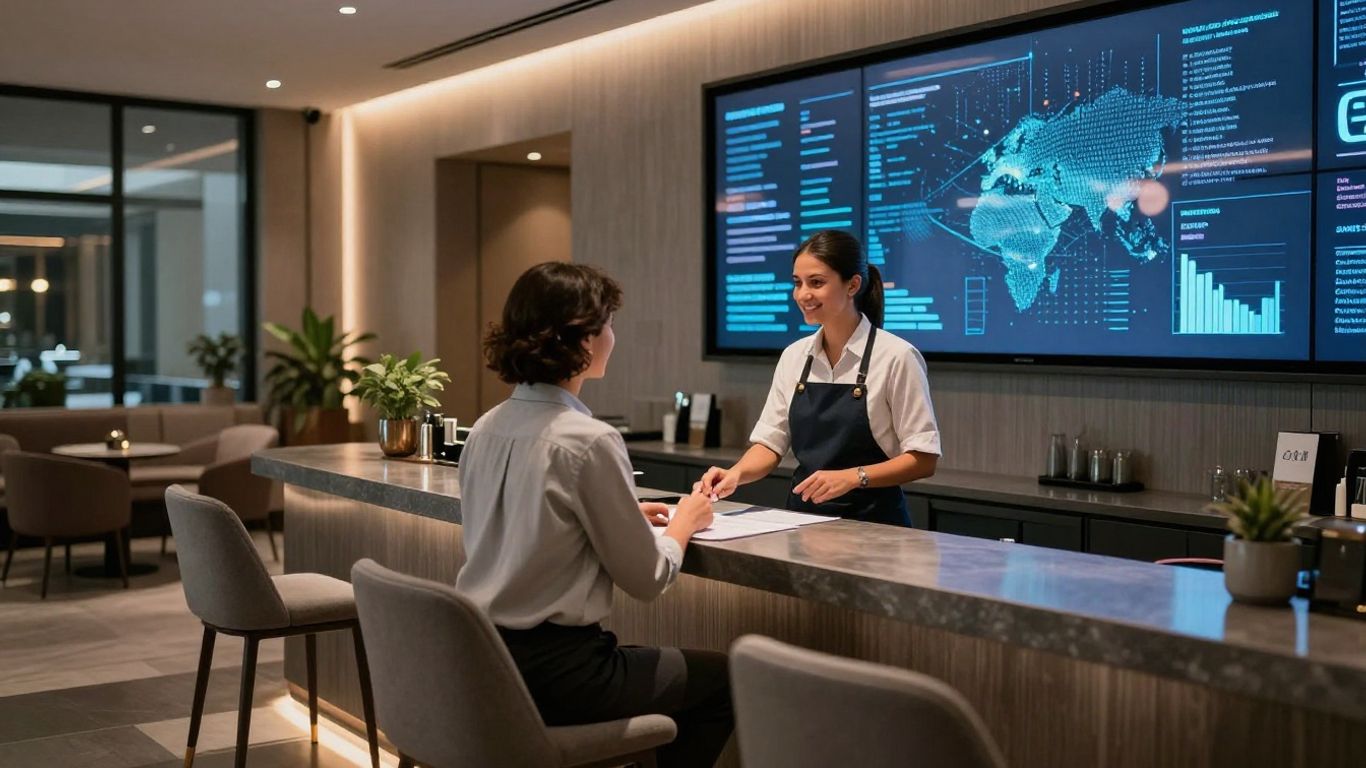
Right now, AI is already doing some pretty handy things for pubs, cafes, and hotels across Australia. It’s not about replacing people, but more about taking the load off repetitive tasks so staff can focus on giving guests a great time. Think of it as a super-efficient assistant that never sleeps.
Streamlining Bookings and Guest Communications
One of the biggest wins for AI is how it handles bookings and chats with customers. You know those endless phone calls and emails asking about opening hours, table availability, or if you do gluten-free options? AI can sort a lot of that out. Chatbots can answer frequently asked questions 24/7, freeing up your front-of-house team. They can even take bookings directly through platforms like WhatsApp or Facebook Messenger, sometimes while you’re closed. This means fewer missed opportunities and happier customers who get answers straight away. For example, some systems can handle up to 80% of common inquiries automatically.
- Automated FAQs: Answer questions about menus, hours, dietary options, and parking instantly.
- 24/7 Booking Management: Allow guests to reserve tables or rooms anytime, anywhere.
- Overflow Call Handling: Catch calls when your phone lines are busy and convert them into bookings.
- Multilingual Support: Communicate with international visitors without needing extra staff.
AI is particularly good at handling the predictable, high-volume questions and tasks that can bog down your team. This frees them up for the more complex or personal interactions that really make a difference to the guest experience.
Optimising Operations with AI Rostering and Waste Tracking
Behind the scenes, AI is also a game-changer for keeping things running smoothly and cutting down on waste. Staff scheduling, or rostering, can be a headache, especially with changing demand and award wages. AI can look at your sales data, upcoming events, even the weather, and suggest the best staff levels for each shift. This helps avoid overstaffing and understaffing, saving money and making sure you’ve got the right people on when you need them. On the food side, AI-powered cameras can actually watch your bins and identify what’s being thrown away. This gives you a clear picture of where your food costs are going and helps you make changes to cut down on waste, which is good for your bottom line and the environment. Some venues have seen food waste drop by up to 25% using these tools.
Enhancing Revenue Through Dynamic Pricing
For hotels especially, but also for restaurants with set menus or special events, AI can help you make more money. It’s called dynamic pricing. Instead of setting one price and hoping for the best, AI can adjust your prices in real-time. It looks at things like how many rooms or tables are left, what competitors are charging, and what the demand is like based on local events or holidays. This means you can charge a bit more when demand is high and offer a better deal when things are quiet, filling up your venue more consistently. This approach can lead to significant revenue increases, with some hotels seeing double-digit percentage gains. AI tools can dynamically adjust room prices by analysing booking data and occupancy levels.
| Venue Type | AI Application | Potential Benefit |
|---|---|---|
| Hotels | Dynamic Pricing | Increased occupancy and revenue |
| Restaurants | AI Rostering | Reduced labour costs, better staff coverage |
| Cafes | Waste Tracking | Lower food costs, reduced environmental impact |
| All | Chatbots | Improved guest satisfaction, increased bookings |
Implementing AI: A Practical Roadmap for Small Businesses
So, you’re thinking about bringing some AI smarts into your Aussie hospitality gig? It sounds a bit daunting, I get it. But honestly, it doesn’t have to be some massive, complicated overhaul. The trick is to start small and be really clear about what you want to achieve. Think of it like adding a new dish to your menu – you test it, you tweak it, and only then do you put it out there for everyone.
Assessing Your Needs and Setting Clear KPIs
First things first, what’s actually bugging you the most right now? Is it the endless phone calls for bookings when you’re flat out? Or maybe you’re seeing a fair bit of food waste at the end of the week? Pinpointing that one big problem is your starting point. Don’t try to fix everything at once; that’s a recipe for disaster. Once you’ve got your target, set a single, measurable goal. This is your Key Performance Indicator, or KPI. It could be something like ‘reduce booking phone time by 30%’ or ‘cut food waste by 15%’. Having a clear target makes it way easier to see if your AI experiment is actually working. It’s also a good idea to get your team involved early. Find someone who’s keen to be your AI champion – they can help bridge the gap between the tech and the day-to-day grind. This whole process is about understanding where you are and where you want to go, much like mapping out a digital transformation roadmap.
Piloting AI Solutions for Measurable Results
Now for the fun part: trying out some AI. Don’t go buying the most expensive system straight off the bat. Look for tools that are easy to use, maybe even ‘no-code’ options, and run a pilot for about six to twelve weeks. This is your testing ground. During this time, you’ll be collecting data and comparing it against that KPI you set earlier. Did the AI booking system actually handle more calls? Did the waste tracker lead to less food going in the bin? Keep an eye on how it’s going and be ready to make adjustments. It’s about getting real, tangible results before you commit to anything bigger. You can even use tools like the National AI Centre’s AI Adoption Tracker to see how you stack up.
Scaling AI Integration Across Your Operations
If your pilot was a winner, then it’s time to think about rolling it out more widely. But again, take it step by step. Integrate the successful AI tools into your main systems, like your point-of-sale or booking software. The goal here is to make things smoother, not more complicated. If your AI tools don’t talk to each other, you’ll end up with more work, not less. Keep an eye on how the AI is performing over time – sometimes these systems can drift or become less accurate. And don’t forget your staff! They’ll need ongoing training to get the most out of the new tech. It’s not about replacing people, but about giving them better tools to do their jobs and focus on what really matters – looking after your guests. This is a key part of AI implementation in Australia.
The biggest mistake small businesses make is trying to do too much too soon. Start with one clear problem, test a simple solution, and only then think about expanding. This measured approach saves money, reduces stress, and actually leads to better outcomes in the long run.
Choosing the Right AI Tools and Vendors
Picking the right AI tools and the companies behind them can feel like a big decision, and honestly, it is. You don’t want to end up with something that just adds more work or doesn’t actually help your venue. It’s about finding solutions that fit your specific needs and don’t break the bank.
Evaluating Integration Capabilities and Support
This is a big one. Most venues are already running a few different systems – think your booking software, your point-of-sale, maybe a staff rostering app. If a new AI tool doesn’t talk nicely with these existing systems, you’re going to create more headaches than you solve. Data can get stuck in silos, and your staff will be constantly switching between screens, which defeats the purpose of automation. Always check if the AI tool can connect with your current setup before you buy. If the integration is clunky, the time you save on automation will just get eaten up by manual workarounds. It’s worth looking at tools that offer good ongoing support too; you don’t want to be left in the lurch when something goes wrong.
Prioritising Transparent Governance and Training
When you’re looking at AI, it’s important to know how it works, especially when it comes to your guest data. You need to be clear on where the data is coming from, how it’s being used, and who’s responsible if something goes awry. This is where transparent governance comes in. It means the AI vendor should be upfront about their processes and how they handle data privacy. On top of that, think about training. Will your staff know how to use the new tools effectively? A good vendor will provide solid training to get your team up to speed. Without it, even the best AI tool won’t be used to its full potential. You can find some great options for Australian small businesses that focus on productivity and task automation here.
Leveraging AI Platforms for Seamless Operations
Think about how AI can actually make your day-to-day operations smoother. It’s not just about fancy tech; it’s about practical benefits. For instance, AI can help predict busy periods, suggest staffing levels, or even flag potential issues before they become big problems. This allows your team to focus on giving guests a great experience rather than getting bogged down in admin. It’s about finding that balance – using AI to handle the repetitive tasks so your people can focus on the human side of hospitality. Some resources even compare different AI tools available in Australia, looking at costs and what works best for different types of businesses like this one.
The goal isn’t to replace your staff with machines, but to give them better tools. AI should handle the low-value, repetitive tasks, freeing up your team to focus on genuine guest interactions and problem-solving. This ‘AI + People’ approach means your venue runs more efficiently while maintaining that personal touch that makes hospitality special.
Navigating AI Governance and Compliance in Australia
So, you’re looking at bringing some AI smarts into your Aussie hospitality business. That’s great! But before you get too carried away with all the cool tech, we need to have a chat about the rules and responsibilities. It’s not exactly rocket science, but it does mean paying attention to a few key things to keep everyone happy and out of trouble.
Understanding Privacy Obligations Under Australian Law
First up, privacy. In Australia, the big one is the Privacy Act 1988 and the Australian Privacy Principles (APPs). Basically, if your AI is dealing with personal guest information – think names, booking details, even dietary preferences – you’ve got to handle it with care. The Office of the Australian Information Commissioner (OAIC) has some pretty straightforward advice on this. They suggest things like doing a Privacy Impact Assessment before you really get going, and making sure your privacy notices are up-to-date. It’s a good idea to avoid chucking sensitive guest data into public AI tools. Think of it like this: if you wouldn’t leave a guest’s personal file lying around the cafe, don’t feed it into a public chatbot.
Implementing Ethical AI Principles
Beyond the strict legal stuff, there’s also the matter of doing things ethically. Australia has put forward some AI Ethics Principles that are worth considering. These generally cover things like making sure your AI is transparent, so you can explain how it makes decisions, especially if those decisions affect your guests. It also means being accountable for what the AI does and giving people a way to question or challenge its outcomes. It’s about building trust, not just ticking boxes.
Here’s a quick rundown of what to keep in mind:
- Privacy Protection: Keep guest data safe and only use it for clear, agreed-upon purposes.
- Transparency and Explainability: Be able to explain how your AI works, especially for decisions that impact guests.
- Contestability: Allow guests to question or challenge AI-driven decisions.
- Accountable Human Oversight: Always have a human in the loop to check AI outputs and make final calls.
Ensuring Data Security and Accountability
Finally, let’s talk security and who’s responsible. You need to think about how you’re protecting the data your AI uses, both when it’s being processed and when it’s stored. This means adopting secure design practices from the get-go. Think about things like controlling who can access what, keeping logs of activity, and having a plan for when things go wrong. It’s also about making sure your vendors are up to scratch, especially if data is being sent overseas. You need to be clear about who is accountable if something goes awry. This is all part of building a responsible AI system that your guests and staff can rely on. For more detailed guidance on setting up a framework, check out this guide.
When you’re implementing AI, remember that while the technology is new, many of the underlying principles of good business practice – like honesty, transparency, and looking after your customers’ information – still apply. It’s about using AI to help, not to hide or to cut corners.
Addressing Challenges and Mitigating Risks with AI
Look, AI is brilliant for a lot of things in hospitality, but it’s not all smooth sailing. We’ve got to be realistic about the bumps in the road. For starters, the cost of getting these systems up and running can be a bit of a shock, and then there’s the worry about getting locked into one supplier. It’s like buying a fancy new coffee machine that only takes their special pods – not ideal.
Managing Costs and Integration Hurdles
The upfront investment in AI can seem steep, especially for smaller businesses. Think about the software, the training, and potentially new hardware. Then there’s the integration itself. Getting new AI tools to talk nicely with your existing systems, like your booking platform or point-of-sale, can be a real headache. It’s not always plug-and-play. Many operators find that starting with a short, focused pilot project is the way to go. This lets you test the waters without committing huge resources. Using AI-as-a-Service (AIaaS) or middleware can also help reduce the complexity and cost of integration.
Maintaining Human Oversight in Guest Interactions
This is a big one. While AI can handle a lot of routine tasks, like answering frequently asked questions or managing bookings, we can’t forget the human touch. Guests still want to feel looked after by a real person, especially when things go wrong or they have a complex request. Imagine a chatbot trying to sort out a serious complaint – it just doesn’t have the empathy or judgement a staff member does. We need to make sure AI assists, not replaces, those crucial moments of genuine connection.
Here are some areas where human oversight is non-negotiable:
- Service recovery and handling complaints
- Dealing with safety incidents or duty of care situations
- Resolving conflicts or sensitive guest issues
- Making decisions that require accountability or empathy
The goal is to use AI to free up your staff from repetitive tasks, allowing them more time to focus on providing exceptional, personalised guest experiences. It’s about augmentation, not just automation.
Upskilling Staff for an AI-Augmented Workforce
Bringing AI into the workplace means our teams need new skills. It’s not about replacing people, but about changing how they work. Staff will need to know how to use the new tools effectively, interpret the data AI provides, and work alongside AI systems. Think of it like learning to use a new piece of kitchen equipment – it takes a bit of practice. Training programs that focus on practical AI use, like prompt engineering for chatbots or understanding AI-generated reports, are becoming really important. This helps your team turn these new technologies into real time and cost savings, rather than just another complicated gadget.
| Skill Area | Example Training Focus |
|---|---|
| AI Tool Operation | Using AI-powered rostering or inventory management software |
| Data Interpretation | Understanding AI-driven demand forecasts |
| Prompt Engineering | Crafting effective queries for AI chatbots |
| Ethical AI Awareness | Recognizing and reporting potential AI bias |
| Cybersecurity Basics | Protecting data when using cloud-based AI tools |
Wrapping Up: AI in Aussie Hospitality
So, there you have it. AI isn’t some far-off future thing for Australian hospitality anymore; it’s here, and it’s making a real difference. We’ve seen how it can sort out bookings when your phone’s ringing off the hook, help you figure out staffing without the guesswork, and even cut down on food waste. It’s about making things run a bit smoother, freeing up your team to actually look after your guests, and maybe even boosting your bottom line. The key is to start small, pick a problem that’s really bugging you, and give it a go. Don’t get bogged down in the techy stuff; focus on what actually helps your business and your customers. Keep an eye on what works, train your staff, and remember that the human touch is still what makes hospitality special. It’s a journey, not a race, and taking those first practical steps now will put you in a good spot for whatever comes next.
Frequently Asked Questions
What exactly is AI in the Australian hospitality scene right now?
Think of AI in Aussie hospitality less like robots taking over and more like a super-smart toolbox. It’s all about using clever computer programs to make everyday jobs easier. This means things like handling bookings automatically, figuring out the best staff schedules based on busy times, and even helping to cut down on food waste. It’s practical stuff that helps businesses run smoother.
How can AI help my restaurant or cafe in Australia?
AI can really help out in lots of ways! It can manage your bookings 24/7, so you don’t miss out on customers. It can help create staff rosters that make sense for when you’re busiest, saving you money. Plus, some AI tools can even track your food stock to help reduce waste, which is good for your wallet and the planet.
Are hotels in Australia using AI, and how?
Absolutely! Hotels are using AI to make guest stays better. AI can help with personalised recommendations for things to do, manage room pricing so it’s always competitive, and even handle guest questions through chatbots so staff can focus on giving a warm welcome. It’s all about making things slicker for travellers.
Is it hard for a small business to start using AI?
It doesn’t have to be! The best way is to start small. Pick one thing you really want to improve, like bookings or staff scheduling. Try out a simple AI tool for a short time, see if it works well, and then if it’s a winner, you can use it more widely. There are even tools that don’t need complex setup.
What about privacy and rules when using AI in Australia?
That’s a really important question. In Australia, you need to follow privacy laws, like the Privacy Act. This means being careful with customer information, telling people how you use their data, and keeping it safe. It’s also good to think about being fair and honest with how AI makes decisions.
Will AI replace my staff in Australia?
Not at all! The goal of AI in hospitality is to help your staff, not replace them. AI is great at doing repetitive tasks, like answering common questions or sorting schedules. This frees up your team to do what they do best: providing great service and making guests feel welcome. It’s about giving them superpowers, not making them redundant.